Best Ways to Make Money Online in Kenya (2026 Guide)

If you’ve been searching for ways to earn money online in Kenya, you’ve probably already scrolled past a dozen pages promising you’ll be a “dollar millionaire” within weeks of signing up for some app.
This guide skips that. It walks through the online income methods that genuinely work for Kenyans right now, what each one actually requires, how much you can realistically expect to earn, how the money lands in your M-Pesa or bank account, and how to avoid the scams that specifically target Kenyan job seekers.
None of these methods will make you rich overnight. Most take 30 to 90 days of consistent effort before you see steady income.
But freelancing, content creation, virtual assistance, tutoring, and legitimate micro-task platforms are all real, working income sources for thousands of Kenyans today — and this article explains exactly how to start.
What Actually Works
The most reliable online income sources for Kenyans fall into five categories:
- Freelancing on international platforms like Upwork and Fiverr (writing, design, virtual assistance, programming, customer support)
- Content creation — YouTube, TikTok, and blogging, monetized through ads, sponsorships, and affiliate links
- Local digital services — social media management, website design, and virtual assistance for Kenyan small businesses, paid directly via M-Pesa
- Online tutoring for Kenyan and international students
- Legitimate micro-task and data-annotation platforms like Remotasks, Appen, and Clickworker, which pay for AI training tasks
Most of these accept Kenyan users, most pay through M-Pesa (directly or via PayPal/Payoneer), and none require you to pay money upfront to “unlock” earnings. That last point matters — legitimate platforms never ask you to pay before you can withdraw what you’ve earned.
Is Making Money Online in Kenya Actually Realistic?
Yes, but with caveats. Kenya has strong internet penetration, near-universal M-Pesa access, and a young, English-speaking population — all of which make it a genuine hub for freelance and digital work. Freelancers based in Kenya commonly bill international clients at roughly $10–$30 an hour depending on skill and platform, though beginners typically start well below that range and build up their rates as they gain reviews and experience.
The trade-off is competition. You’re competing with freelancers from the Philippines, India, Nigeria, and Eastern Europe on the same platforms, so the first few months are usually about building a track record rather than earning serious money. Content creation and local digital services (like managing social media for a salon or restaurant in your town) tend to pay faster than global freelancing because there’s less competition and quicker trust-building.
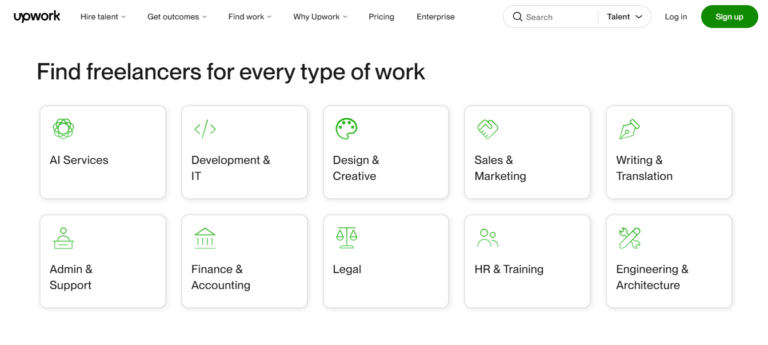
1. Freelancing on Global Platforms (Upwork, Fiverr, Freelancer)
What it is: Selling a skill — writing, graphic design, video editing, web development, virtual assistance, customer support — to clients abroad through a marketplace that handles contracts and payment.
How it works in Kenya: You create a profile, apply for jobs (Upwork) or list services as “gigs” (Fiverr), complete work, and get paid once the client releases funds. Upwork now supports direct M-Pesa withdrawal for Kenyan freelancers, in addition to PayPal and Payoneer, which removes a step that used to frustrate a lot of beginners.
Requirements: A laptop or a capable smartphone, stable internet, a portfolio (even 2–3 sample projects), and patience for the first few proposals to go unanswered — this is normal for every new freelancer, not a sign you’re doing something wrong.
Realistic earnings: New freelancers often start at $3–$8 per hour or per small gig while building reviews. Experienced Kenyan freelancers with a strong portfolio and niche specialization (technical writing, WordPress development, video editing) can reach $15–$30+ per hour. These are illustrative ranges based on commonly reported rates for the region, not guarantees — your actual rate depends on your skill, niche, and client base.
2. Content Creation: YouTube, TikTok, and Blogging
What it is: Building an audience around a topic — comedy, tech reviews, cooking, farming, finance — and monetizing through advertising, brand sponsorships, and affiliate links.
How it works in Kenya: YouTube’s Partner Program and TikTok’s creator monetization tools are both available to Kenyan creators once they hit the platform’s minimum subscriber/watch-time or follower/view thresholds. YouTube pays through AdSense, which supports bank transfer to most major Kenyan banks. Blogging earns through display ads (Google AdSense), sponsored posts, and affiliate marketing.
Requirements: A smartphone with a decent camera is enough to start — you don’t need expensive equipment. What you do need is consistency (regular posting) and a clear niche, since generic “vlog about my life” channels rarely grow fast.
Realistic earnings: This is the slowest-starting method on this list. Most creators earn very little (or nothing) for the first 3–12 months while building an audience. Once monetized, income varies enormously based on niche, audience size, and how well you diversify beyond ad revenue into sponsorships and affiliate income — there’s no reliable “per 1,000 views” figure that applies evenly across niches, so treat any specific number you see elsewhere with skepticism.
3. Digital Services for Local Kenyan Businesses
What it is: Offering social media management, basic website design, graphic design, or virtual assistant services directly to Kenyan SMEs — salons, restaurants, boutiques, gyms, clinics — rather than competing globally.
How it works in Kenya: You approach local businesses (often via WhatsApp, Instagram, or in person), pitch a simple package (e.g., managing their Instagram and Facebook for a monthly retainer), and get paid via M-Pesa, Paybill, or bank transfer — no currency conversion, no international withdrawal fees, no waiting days for funds to clear.
Requirements: Basic skills in content creation, Canva design, or simple ad management. No portfolio is strictly required to start, but showing 2–3 sample posts you’ve created for a mock client helps you close your first deal.
Realistic earnings: Local retainers are typically smaller in absolute terms than international freelance rates but land faster and with none of the payment friction — many Kenyan digital marketers report their first paying local client within weeks rather than months, though this varies by how proactively you pitch businesses.
4. Online Tutoring
What it is: Teaching academic subjects, English, coding, or exam prep (KCSE, SAT, IELTS) to students in Kenya or abroad through video call platforms or dedicated tutoring marketplaces.
How it works in Kenya: Tutors register on a platform, set availability, and get booked by students. International tutoring platforms typically pay via PayPal, Payoneer, or direct bank transfer; some Kenyan-focused tutoring services pay via M-Pesa.
Requirements: Subject expertise (a degree or strong grades in the subject helps but isn’t always mandatory), a stable internet connection, and a quiet space for video calls.
Realistic earnings: Rates vary widely by subject and platform, from modest hourly rates for local tutoring to significantly higher rates for specialized international test prep (GMAT, IELTS) where demand is strong and few tutors are qualified.
5. Microtasks and AI Data Work (Remotasks, Appen, Clickworker)
What it is: Small, repetitive digital tasks — labeling images, transcribing audio, rating search results, annotating data for AI training — that companies outsource to distributed workers worldwide.
How it works in Kenya: You sign up, complete a qualification test, and get access to available tasks. Pay is usually per task or per batch, with weekly payouts via PayPal or Payoneer.
Requirements: No specialized skills for most entry-level tasks, though better English comprehension and attention to detail unlock higher-paying task categories over time.
Realistic earnings: This is genuinely beginner-friendly, but pay per task is usually low, and task availability fluctuates — it works best as a side income or a stepping stone while you build skills for higher-paying freelance work, not as a primary income plan.
Comparison Table: Which Method Fits You?
| Method | Difficulty | Startup Cost | Payment Method | Best For |
|---|---|---|---|---|
| Global freelancing (Upwork/Fiverr) | Medium | Low (device + internet) | M-Pesa, PayPal, Payoneer | People with a marketable skill (writing, design, dev) |
| Content creation (YouTube/TikTok) | Medium–High | Very low | Bank transfer (AdSense), M-Pesa (sponsorships) | Patient creators building a niche audience |
| Local digital services for SMEs | Low–Medium | Very low | M-Pesa, Paybill | People who want faster, local income |
| Online tutoring | Medium | Low | PayPal, Payoneer, M-Pesa | Teachers, graduates, subject experts |
| Microtasks/AI data work | Low | None | PayPal, Payoneer | Absolute beginners, side income |
Requirements to Get Started
Across almost all of these methods, you’ll need:
- A smartphone or laptop with a stable internet connection (mobile data works, but Wi-Fi is more reliable for video calls and large uploads)
- An email address and, for most platforms, a KRA PIN if you’re formalizing income for tax purposes
- A payment account: M-Pesa is essential for everything; a PayPal or Payoneer account expands what you can access internationally
- Basic English proficiency for most freelancing, tutoring, and microtask platforms
- Patience — the first 30–60 days rarely pay much; that’s normal, not a sign of failure
How Much Can You Realistically Earn?
There is no honest, universal number here, and any article that gives you one fixed figure (“earn KSh 50,000 a week guaranteed”) is either exaggerating or guessing. What actually determines your income:
- Time invested — a few hours a week produces side-income results; 20–30+ focused hours a week is what most successful full-time online earners in Kenya put in
- Skill level — specialized, in-demand skills (technical writing, web development, video editing) command far higher rates than generic data-entry work
- Platform and niche — some niches (finance, tech, health) pay more per project than others
- Consistency and reputation — reviews, ratings, and repeat clients compound over time; your third month is usually more profitable than your first, all else equal
- Number of income streams — many successful Kenyan online earners combine two or three methods (e.g., freelance writing plus a small YouTube channel) rather than relying on one
Treat every specific earnings figure you read online — including general ranges in this article — as an estimate based on commonly reported experiences, not a guarantee of what you personally will earn.
Read also: How to Make Money Online in Kenya
How You Get Paid: M-Pesa, PayPal, and Payoneer Explained
This is the part most generic articles get wrong or skip entirely, so here are the actual mechanics as they stand in 2026.
Upwork to M-Pesa (direct): Upwork now offers M-Pesa as a direct withdrawal method for Kenyan freelancers, alongside PayPal and Payoneer, with funds typically arriving within about a day of withdrawal.
PayPal to M-Pesa: Since Safaricom integrated PayPal into the M-Pesa Super App under “M-Pesa Global,” Kenyans can link the two and withdraw directly. PayPal charges a flat 3% conversion fee built into its daily exchange rate for both withdrawals and top-ups. Standard M-Pesa transaction limits apply on the Kenyan side: KES 250,000 per transaction and KES 500,000 per day, with a maximum M-Pesa balance of KES 500,000. Settlement is usually fast (minutes to a couple of hours) but can take up to three business days for larger amounts. It’s worth noting that PayPal in Kenya currently only offers personal accounts, not business accounts, which matters if you’re planning to scale into a registered freelance business.
Payoneer: Popular with freelancers because of generally lower fees than PayPal on larger international transfers, but Payoneer does not offer a direct-to-M-Pesa transfer the way PayPal does — you typically withdraw from Payoneer to a linked Kenyan bank account instead, which takes a few business days.
YouTube AdSense: Pays via direct bank transfer to most major Kenyan banks once you cross the platform’s payment threshold, rather than through mobile money.
Because fees and processing times change and vary by exact use case, always check the current rate inside the app before a large withdrawal, and consider keeping more than one payment method active in case one is temporarily unavailable.
Advantages and Disadvantages
Advantages:
- Work from anywhere with internet — no commute, no need to relocate to Nairobi
- Many platforms pay in USD, which converts favorably against KES for dollar-denominated work
- Low startup cost compared to a physical business
- Flexible hours, which suits students, parents, and people working other jobs
Disadvantages:
- Income is inconsistent at first, sometimes for months
- Global competition means undercutting on price is common, especially for beginners
- Currency conversion fees (PayPal’s 3%, Payoneer’s markup) quietly reduce your effective earnings
- Scams specifically target people searching for exactly this kind of opportunity
- No employment benefits — no NHIF/SHA, no pension contributions, unless you arrange these yourself
Common Problems Kenyan Online Workers Face
- Payment delays — international platforms sometimes hold funds for days before release, which can be frustrating if you’re relying on that income for immediate expenses
- Unreliable internet or power — especially outside major towns, this can cost you deadlines and client trust
- Name mismatches — PayPal-to-M-Pesa transfers fail if the name on your PayPal account doesn’t exactly match your M-Pesa registration
- Underpricing — many beginners set rates too low trying to win their first jobs, then struggle to raise them later
- Platform account restrictions — international payment platforms sometimes flag or restrict Kenyan accounts for verification reasons unrelated to any wrongdoing; keeping a second payment method active reduces the impact if this happens
Is It Legit or a Scam? Red Flags to Watch For
Kenyan job seekers are a frequent target for online recruitment fraud, and the schemes follow recognizable patterns. Kenya’s Directorate of Criminal Investigations has repeatedly warned the public about fake work-from-home offers sent through WhatsApp, where scammers lure people with a simple task and a small payout before escalating to demands for larger “advance” payments that are never returned. The Public Service Commission has separately warned Kenyans about fraudsters posing as government recruiters and demanding bribes for jobs that don’t exist.
Genuine red flags:
- Any request to pay money before you can start earning or before you can withdraw funds you’ve supposedly already made
- Unsolicited job offers arriving via WhatsApp or SMS from unknown numbers, especially ones added to random group chats
- “Task and earn” schemes that start with small, real-looking payouts before asking for larger “upgrade” or “unlock” payments
- Promises of guaranteed, fixed weekly income regardless of effort
- Requests for your M-Pesa PIN, ID number, or bank login details — legitimate platforms never need your PIN
- Poor grammar, mismatched company logos, or links that don’t lead to an official company domain
Signs of legitimacy:
- The platform is a recognizable name (Upwork, Fiverr, YouTube, Remotasks, Appen) with a public track record
- You only get paid after completing verifiable work — never asked to pay to receive payment
- Payment methods match what the company officially lists on its own website, not a number given to you privately
If an offer found you (rather than you applying to it), and it asks for money at any stage, treat it as a scam until proven otherwise.
Tips for Making More Money Online in Kenya
- Specialize instead of generalizing. “I do everything” converts worse than “I write SEO articles for fintech companies.”
- Combine one global and one local income stream. International freelancing pays better per hour; local clients pay faster and more reliably.
- Build a simple portfolio before you need one. Even three unpaid sample projects make your first pitch far more convincing.
- Keep two payment methods active. If PayPal or Payoneer flags your account, you’re not stuck.
- Track your income and set aside money for tax obligations from day one, rather than treating it as an afterthought once KRA comes asking.
- Reinvest early earnings into skill-building — a paid course or certification in your niche often pays for itself within a month or two of higher rates.
- Don’t quit a stable income source until your online income has been consistent for several months, not just one good week.
Alternatives Worth Considering
- Dropshipping and e-commerce (via Jumia, Kilimall, or your own store) suits people comfortable with marketing and customer service, but requires more patience to become profitable than most guides admit.
- Affiliate marketing through programs like Jumia’s KOL (Key Opinion Leader) program works well if you already have an audience on social media, since you’re monetizing attention you’ve already built rather than starting from zero.
- Remote employment (customer support, virtual assistant, QA/operations roles for foreign companies) offers steadier income than gig freelancing, though it usually takes longer to land than a single freelance gig.
- Selling digital products (templates, courses, Canva designs) suits people with an existing skill they can package once and sell repeatedly, though building the initial audience to sell to takes real effort.
Frequently Asked Questions
Can I make money online in Kenya without any capital? Yes. Microtasking, tutoring, freelance writing, and social media management for local businesses all require little more than a smartphone and internet access. The main “cost” is your time while you build a track record.
Which online payment method is best for Kenyans? It depends on the platform. M-Pesa is essential for almost everything. PayPal is widely accepted and links directly to M-Pesa, but carries a 3% conversion fee. Payoneer often has better rates for larger international transfers but withdraws to a bank account rather than directly to M-Pesa.
Do I need to pay tax on money earned from Upwork or YouTube? Generally yes — Kenya taxes residents on worldwide income, which includes foreign-sourced freelance and platform earnings. Registering for a KRA PIN and understanding whether Turnover Tax applies to you is worth doing early rather than later.
How long does it take to start earning online in Kenya? Microtasking and local digital services can produce your first payment within days to a few weeks. Freelancing on Upwork or Fiverr typically takes several weeks to a few months to build enough reviews for steady work. Content creation (YouTube, TikTok) is usually the slowest, often taking many months before meaningful monetization.
Is Upwork or Fiverr better for beginners in Kenya? Fiverr lets you list ready-made “gigs” that clients browse and buy, which can suit beginners who prefer not to write proposals. Upwork requires actively applying to job postings, which takes more effort upfront but often leads to longer-term client relationships.
How do I know if an online job offer is a scam? The clearest test: does it ask you to pay money before you can earn or withdraw? If yes, it’s a scam. Legitimate platforms only pay you for verified work completed.
Can I withdraw my online earnings directly to M-Pesa? For many platforms, yes — either directly (Upwork now supports this) or through PayPal’s M-Pesa integration. Payoneer currently requires withdrawing to a bank account first.
Conclusion
Making money online in Kenya is genuinely possible, but it works more like building a small, real career than flipping a switch. Freelancing pays well once you have reviews and a niche; local digital services get you paid faster with less competition; content creation is a long game that can eventually pay off in multiple ways; and microtasking is a reasonable entry point if you’re starting from absolute zero.
The most practical next step is to pick one method that matches the skills and time you actually have right now — not the one that sounds most exciting — and commit to it for at least 60 days before judging whether it’s working. Keep your M-Pesa and at least one international payment method (PayPal or Payoneer) ready, register for a KRA PIN early, and treat any opportunity that asks you for money upfront as a scam until proven otherwise.
Read also:





4 Comments