Online Jobs in Kenya: The Complete Guide to Working from Home

“Online jobs in Kenya” covers more ground than most articles admit. It can mean a salaried remote position with a company abroad, a freelance contract on Upwork, a task-based gig on an AI data platform, or a customer support role with a BPO firm that happens to let you work from your bedroom.
Each of these works differently — different pay, different stability, different application process. This guide separates them clearly so you know exactly what you’re applying for.
Nothing here promises instant or guaranteed income. Some of these are proper jobs you interview for; others are gig work you pick up and drop as you like. Knowing which is which will save you time and help you avoid the scams that flood this exact search term.
What Online Jobs Are Actually Available to Kenyans?
Real, verifiable online work available to people in Kenya falls into four broad categories:
- Remote employee jobs — customer support, virtual assistance, and back-office roles with international companies or outsourcing firms, applied for and interviewed like a normal job, often paid monthly.
- Freelance contract work — writing, design, development, admin support, and more, taken through marketplaces like Upwork and Fiverr, paid per project or per hour.
- Task-based gig platforms — AI data annotation, transcription, and micro-tasks through platforms like Remotasks, Appen, and Outlier, paid per task or per hour with no fixed schedule.
- Content and audience-based income — YouTube ad revenue (fully available to Kenyan creators) and, to a lesser extent, TikTok brand deals.
What doesn’t count as a real “online job”: anything demanding a fee before you start, “data entry” offers promising flat daily payouts with no interview, or WhatsApp messages from recruiters you never contacted. These patterns are covered in detail further down.
Read also: How to Make Money Online in Kenya
Employee vs. Freelance vs. Gig Work: Know the Difference First
This distinction matters more than most job-seeker content admits, because it changes what you’re entitled to and how you’re paid.
- Employee roles (even if “remote” and even if the employer is abroad) usually involve an application, interview, a fixed schedule, and a monthly or bi-weekly wage. Some Kenya-facing employers, like Wing Assistant, hire Kenya-based remote workers this way.
- Freelance/contractor roles mean you’re your own business — you set (or negotiate) your rate, invoice for completed work, and are responsible for your own schedule and, generally, your own taxes and benefits.
- Gig/task work (Remotasks, Appen-style platforms) has no interview and no fixed hours — you complete available tasks when they exist and get paid per task or per hour worked.
Requirements to Get Started
- A working smartphone, and ideally a laptop for anything involving typing, spreadsheets, or design work — most customer support and virtual assistant roles require a laptop or desktop with a headset.
- Stable internet. Employee-style remote roles, in particular, often require a minimum internet speed and a quiet, dedicated workspace as a condition of the job.
- A national ID for identity verification on most legitimate platforms and employers.
- A CV and, ideally, a LinkedIn profile. Formal remote roles are applied for like any other job — a generic CV blasted at every listing performs worse than one tailored to the specific role.
- A payment method appropriate to the job — a bank account for salaried remote roles, and PayPal, Payoneer, or Wise for most freelance/gig platforms (M-Pesa withdrawal is supported directly by some, like Upwork, per its own support documentation).
Types of Online Jobs You Can Actually Do From Kenya
1. Remote Customer Support and BPO Roles
This is one of the largest categories of genuine online work for Kenyans, split between two very different setups:
- Office-based BPO employment in Nairobi. Large outsourcing firms like Teleperformance and Concentrix operate physical offices in Nairobi (Teleperformance has a Westlands office) and hire for voice, chat, and back-office support — most of these advertised roles are office-based or hybrid rather than fully remote, despite “remote” language sometimes used loosely in ads.
- Fully remote, Kenya-eligible roles with companies like Wing Assistant, which has advertised Kenya-only remote customer support roles paying in the range of $450–$570 a month, and other remote-workforce companies (CrewBloom, LTVplus) that specifically list Kenya among eligible countries for select support roles.
What the work involves: answering customer emails, live chat, or calls; resolving complaints; logging tickets; sometimes light technical troubleshooting.
2. Virtual Assistant (VA) Roles
Virtual assistants handle admin work remotely — inbox and calendar management, data entry, research, scheduling, light bookkeeping, or social media posting for a business owner or executive abroad.
- VA staffing agencies (BELAY, Time Etc, Boldly, 20four7VA) recruit VAs and match them with clients, typically paying in the $5–$25/hour range depending on the agency, the client, and your experience level — rates on the higher end usually apply to US/EU-based contractors, and Kenya-facing listings on the same agencies often start lower.
- Direct freelance VA work through Upwork or Fiverr, where you set your own rate based on your skills and track record.
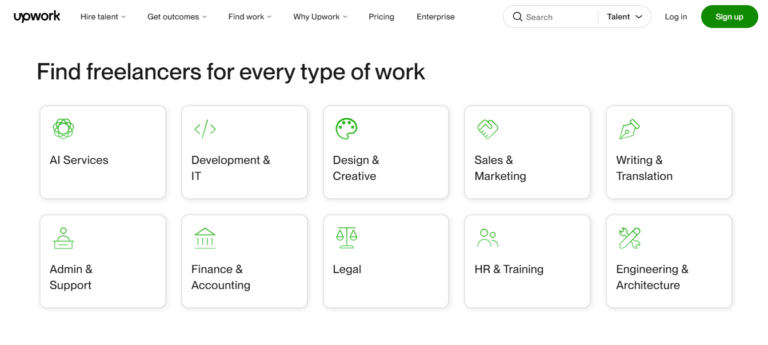
3. Freelance Marketplaces (Upwork, Fiverr, and Similar)
If you have a specific marketable skill — writing, graphic design, web development, translation, bookkeeping — Upwork and Fiverr remain the most established route to international clients, and both explicitly support Kenyan freelancers, with Upwork listing M-Pesa as a direct payout option for Kenya-based freelancers according to its own support documentation.
4. AI Data Work: Annotation, Transcription, and AI Training
Platforms like Remotasks (Scale AI), Appen, and Outlier hire globally, Kenya included, for tasks like labeling images, transcribing audio, and evaluating AI-generated responses. No portfolio is required, just a short assessment. Multiple independent reviews describe reported pay in the rough range of $3–$7/hour for basic tasks, rising to $10–$20/hour for advanced or specialized work — genuinely useful as flexible supplemental income, less reliable as a sole source of income because task availability fluctuates week to week.
5. Content Writing, Transcription Services, and Online Tutoring
Content-writing platforms and transcription services (paid per word or per audio minute) hire remotely, as do online tutoring platforms for subjects ranging from mathematics to English language teaching. Pay varies enormously by niche — technical, financial, and specialist subject-matter writing or tutoring generally out-earns general content work, because the required expertise is scarcer.
6. Content Creation (YouTube Pays in Kenya; TikTok’s Core Fund Doesn’t — Yet)
Kenya is one of the relatively few African countries where YouTube’s Partner Program — its ad-revenue-sharing scheme — is fully available, requiring 1,000 subscribers and either 4,000 valid watch hours in the past year or 10 million Shorts views in 90 days. TikTok’s equivalent, the Creator Rewards Program, is not currently available to Kenya-based accounts; Kenyan TikTok creators instead earn mainly through live-stream gifts and brand/affiliate partnerships.
Where to Actually Find These Jobs
| Platform | Best For | Notes |
|---|---|---|
| BrighterMonday Kenya | Local and some remote-friendly corporate roles | Kenya’s largest general job board; now tags some listings as remote-friendly |
| Fuzu | Entry-level to mid-level roles, career coaching | Africa-focused; includes skills assessments and CV feedback alongside listings |
| MyJobMag Kenya | Broad local and regional listings | General-purpose job board covering most sectors |
| Remote-tagged corporate and BPO roles | Use the “Remote” location filter; increasingly the best source for legitimate remote employer listings | |
| Upwork / Fiverr | Freelance contract work | Global freelance marketplaces with confirmed Kenyan freelancer support |
| Himalayas, RemoteRocketship, We Work Remotely, Jobgether | Remote-first companies specifically | Aggregate listings from companies that hire globally or list Kenya as an eligible location |
| Remotasks / Appen / Outlier | Task-based AI data work | Apply directly on the platform; no interview, just an assessment |
How Much Can You Realistically Earn?
There’s no single honest figure, and it varies enormously by category:
- Employee-style remote support/VA roles targeting Kenya specifically have been advertised in the rough range of $450–$570 a month for full-time customer support, and some remote support/contractor listings targeting Kenya-based workers pay as little as $4–$8 an hour — considerably below US-facing rates for the same job titles, so always check the advertised pay before applying rather than assuming parity with US listings for the same role.
- VA agency work (BELAY, Time Etc, and similar) is typically advertised at $15–$30/hour, though these figures are usually aimed at US-based contractors; Kenya-facing rates on the same platforms are commonly lower.
- AI data annotation commonly falls in the $3–$7/hour range for basic tasks, up to $10–$20/hour for advanced specialized work.
- Freelance rates on Upwork/Fiverr are entirely down to your skill, niche, and negotiating position — there’s no fixed range, and specialized skills (development, technical writing) earn well above generic services.
Treat any listing promising a fixed high daily rate for unskilled “online work” with real skepticism — it’s one of the clearest scam signals in this space.
Advantages and Disadvantages
Advantages:
- A genuine path to foreign-currency income or stable monthly pay without relocating.
- Flexible schedules for gig and freelance work; more structure (and sometimes benefits) for employee-style remote roles.
- Skills built in these roles — customer service, admin, writing, technical skills — transfer directly to local job opportunities too.
Disadvantages:
- Pay for Kenya-facing remote roles is often noticeably lower than for the same job advertised to US or EU applicants.
- Employee-style listings can be scarce relative to demand, and application processes are competitive.
- Task-based gig platforms offer no guaranteed hours or income.
- Time zone requirements for some voice/chat support roles can mean working odd hours to match US or European business hours.
Common Problems Job Seekers Run Into
- Listings that say “remote” but are actually hybrid or office-based, particularly common in BPO job ads — always confirm directly with the employer before assuming full remote work.
- Genuine competition. Popular remote-eligible roles (VA, customer support) attract large applicant pools, so a tailored application matters more than volume-applying.
- Confusing gig work with employment. Task platforms don’t offer job security or guaranteed hours, and treating them as a primary income source without a backup plan can leave you short in a slow week.
- Time zone mismatches for voice-based support roles tied to US or European working hours.
Is It Legit or a Scam? Red Flags in Online Job Ads
The search term “online jobs Kenya” is heavily targeted by scammers precisely because it’s so commonly searched. Kenyan fact-checkers and consumer-safety sources consistently flag the same patterns:
- Any request for a “registration,” “training,” or “processing” fee before you can start. Genuine employers and platforms — BrighterMonday, Fuzu, Upwork, Remotasks — are free to apply to and join.
- Guaranteed high daily pay for vague “online work” (“Earn KSh 5,000–10,000 a day, no experience needed”). No legitimate unskilled online task work pays at that rate.
- Unsolicited job offers via WhatsApp, SMS, or Telegram from “recruiters” you never applied to. Legitimate remote employers post on job boards and platforms, not cold DMs.
- Requests to pay for “interview slots,” equipment, or a “starter kit” before onboarding — a well-documented pattern in real Kenyan job-scam cases, including fake overseas placement schemes.
- Pressure tactics — urgent deadlines pushing you to act before you can research the company.
- Payment demanded in gift cards or cryptocurrency for tasks that have no legitimate reason to involve either.
- Recycled “proof” screenshots of huge daily M-Pesa earnings circulating across unrelated WhatsApp and Telegram groups.
A simple verification checklist before applying or paying anything:
- Search the company name plus “scam” or “review” — Trustpilot, Reddit, and Kenyan consumer forums tend to surface problems quickly.
- Check whether the company has a verifiable business presence — a real website, LinkedIn company page, or physical address, not just a phone number.
- Confirm the employer pays you — never the reverse.
- Apply directly through the company’s own careers page or a recognized job board rather than a link forwarded in a chat group.
Tips for Getting Hired
- Tailor your CV and application to each specific listing rather than sending the same generic version everywhere — recruiters for popular remote roles can tell within seconds.
- Build a small portfolio before you need one. Even unpaid sample work (a mock customer-support transcript, a sample article, a demo VA task log) strengthens early applications.
- Be specific about your availability, especially for voice/chat support roles tied to US or European hours — employers screen this early.
- Use LinkedIn actively, not just as a static CV — following companies, engaging with posts, and applying promptly to new remote-tagged listings genuinely improves visibility.
- Verify pay expectations before applying. If a listing doesn’t state pay, ask early rather than after an offer, since Kenya-facing remote roles can differ substantially from the same job title advertised elsewhere.
Alternatives Worth Considering
- Local digital agencies in Nairobi and other cities sometimes subcontract remote-style work (social media management, admin support, content) at more modest but steadier local rates.
- Skills upgrading first. If you’re struggling to land employee-style remote roles, platforms offering free or low-cost digital skills training can make your applications more competitive before you apply.
- A hybrid approach — pairing a lower-commitment gig platform (for immediate, flexible income) with ongoing applications to salaried remote roles (for long-term stability) is a common and sensible way to bridge the gap.
Frequently Asked Questions
Are remote jobs in Kenya real, or is it mostly gig work? Both exist. Genuine salaried remote employee roles for Kenya-based workers are real and growing (Wing Assistant, CrewBloom, and similar companies advertise Kenya-specific remote positions), alongside freelance and task-based gig work. They’re applied for differently, so check which type a listing actually is before applying.
Why do some “remote jobs” for Kenya pay so much less than the same job in the US? Employers pricing roles for a specific country typically benchmark against that country’s cost of living and local labor market rather than a US or European rate. It’s worth comparing several listings for the same role before accepting one, since rates for Kenya-facing positions vary significantly between employers.
Is BrighterMonday or Fuzu safe to use? Yes — both are established, well-known Kenyan job platforms. As with any job board, be cautious of individual listings that ask for payment or unusual personal information, since scam ads can appear even on legitimate boards.
Do I need a degree to get an online job in Kenya? It depends entirely on the role. Many virtual assistant, customer support, and freelance positions prioritize relevant experience and skills assessments over formal qualifications; some corporate remote roles and specific BPO positions do require a degree or professional certification.
How can I tell if a “remote job” listing is actually fully remote? Confirm directly with the employer, ideally through their own official careers page, rather than assuming from the ad’s wording — several outsourcing firms in Kenya advertise loosely worded “remote” roles that turn out to be office-based or hybrid.
What’s the fastest legitimate way to start earning online in Kenya? Task-based AI data platforms (Remotasks, Appen, Outlier) generally have the shortest path from signup to first payout since they require no interview, only a short assessment — though income from these is best treated as supplemental rather than a full replacement for steady work.
Conclusion
Online jobs in Kenya span a real spectrum — from salaried remote employment with international companies, to freelance contracts, to flexible task-based gig work, to content creation that genuinely pays through YouTube.
Each suits a different situation: employee-style roles suit people who want structure and predictable pay; freelancing suits people with a marketable skill and the patience to build a client base; gig platforms suit people who want flexible, low-commitment supplemental income.
Whichever route you choose, apply through recognized platforms, verify any employer before engaging further, and never pay to access work that should be paying you. Pick one category that matches your current skills and time availability, apply consistently, and give it a realistic few weeks to months before judging results.
Read also:





4 Comments