How to Make Money on Upwork in Kenya: A Complete Guide
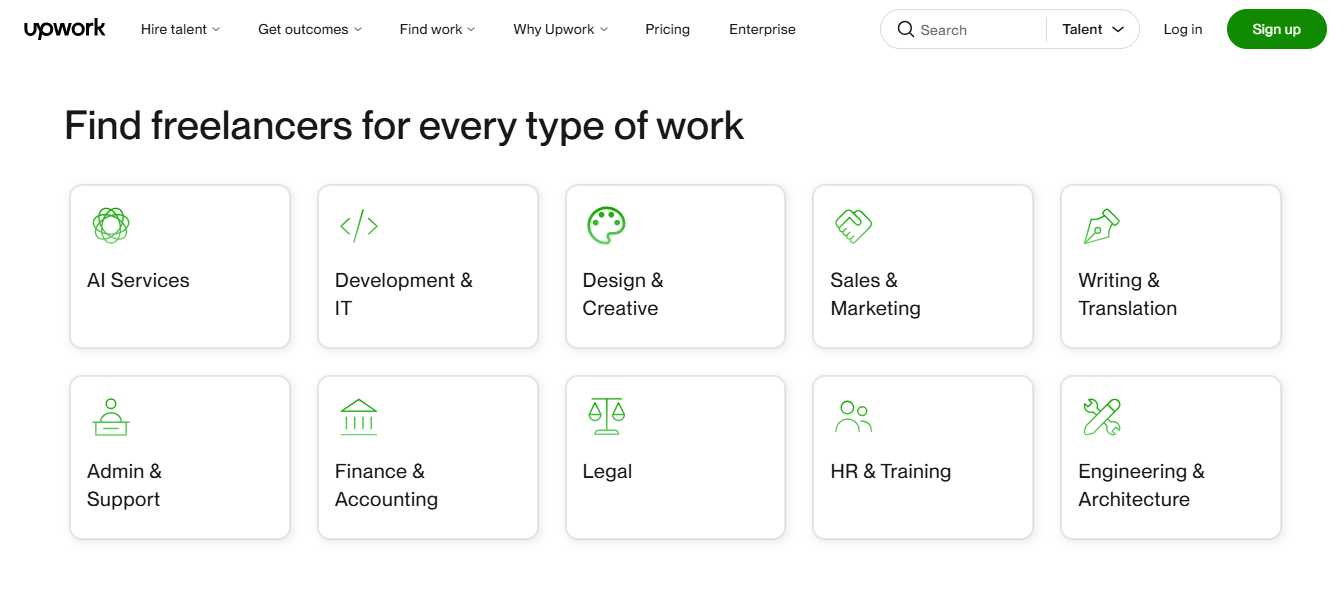
Upwork is one of the few major freelance platforms that officially supports direct M-Pesa withdrawal for Kenyan freelancers, according to its own support documentation — which makes it one of the more practical entry points into international freelancing from Kenya.
This guide covers the entire process specific to Upwork: setting up an account that gets approved, understanding how Upwork’s fees and Connects system actually work, winning your first contracts, and getting paid.
This isn’t a general “how to freelance” guide — it’s specifically about how Upwork’s mechanics work and how to use them as a Kenyan freelancer.
Can You Really Earn on Upwork From Kenya?
Yes. Upwork operates globally and explicitly supports Kenyan freelancers, with M-Pesa listed as a direct payout option specifically for Kenya per Upwork’s official support pages, alongside PayPal and Payoneer.
There’s no special restriction on Kenyan accounts beyond the same identity verification every freelancer worldwide goes through. Success depends on having a specific, well-presented skill and understanding how Upwork’s proposal and reputation systems work — not on your location.
Step 1: Setting Up an Upwork Account That Gets Approved
- Sign up with a real email and complete every profile field — incomplete profiles are one of the most commonly cited reasons for slower approval or lower visibility.
- Use a real, professional, face-forward photo. Filtered, group, or non-human profile photos frequently trigger review delays.
- Expect identity verification. Upwork may ask new freelancers — including Kenyan applicants — to verify identity using a government-issued photo ID (a Kenyan national ID or passport is accepted) and, in some cases, a phone or brief video check. This is standard security practice, not a sign anything is wrong with your application, and Upwork’s own documentation states this is usually completed within minutes to 48 hours once submitted.
- List specific, relevant skills rather than a broad, generic skill list — Upwork’s own guidance points to accurate, specific skills as a factor in faster approval and better matching.
- Write your title and overview around a specific outcome, not a job title — “SEO content writer for SaaS companies” performs better than “Writer.”
Standard account review typically takes 24–48 hours, though Upwork notes complex cases can take longer.
Step 2: Understanding Connects (Upwork’s Bidding Currency)
Every proposal you submit on Upwork costs Connects — a form of platform currency you spend to bid on jobs:
- Connects cost roughly $0.15 each, and most job proposals require somewhere between 4 and 16 Connects depending on the job’s visibility and competitiveness.
- New freelancers typically receive a starter allotment of free Connects, and some account tiers include a monthly free allowance.
- Earning the Rising Talent badge (explained below) grants a one-time bonus of 30 free Connects.
- Because Connects cost real money, submitting proposals to poorly matched jobs is a direct financial cost, not just wasted time — target roles that genuinely fit your listed skills.
Step 3: Understanding Upwork’s Badge System (Your Path From New to Trusted)
Upwork uses a tiered badge system that heavily affects how often clients see and trust your profile:
- Rising Talent — the entry-tier badge for freelancers who don’t yet have enough completed contracts to have a Job Success Score (JSS). It’s awarded based on profile completeness, in-demand skills, and early positive engagement, and comes with a one-time bonus of 30 free Connects. It’s intentionally transitional — once you earn a JSS, Rising Talent is typically replaced by it.
- Job Success Score (JSS) — appears once you’ve completed at least two contracts with two different clients; recalculated roughly every two weeks based on client feedback, repeat hire rates, and completed work. A JSS of 90% or higher is the general benchmark to aim for.
- Top Rated — generally requires a JSS of 90%+ sustained over roughly 13 of the last 16 weeks, plus at least $1,000 earned in the past 12 months and a complete profile in good standing.
- Top Rated Plus / Expert-Vetted — higher tiers for freelancers with a strong track record on larger contracts, the latter involving manual screening by Upwork’s own talent team.
Practical implication for new Kenyan freelancers: your first goal isn’t chasing a badge directly — it’s completing your first two contracts well, since that’s what unlocks a JSS in the first place. Everything after that follows from consistent, well-reviewed delivery.
Read also: How to Make Money Online in Kenya
Step 4: Understanding Upwork’s Fees (What You Actually Keep)
Upwork’s fee structure has changed more than once in recent years, so treat any specific number as approximate and confirm the rate shown on your own proposals:
- Multiple sources describe the current freelancer service fee as roughly 10% flat on earnings, though some more recent reporting describes a variable 0–15% fee set per contract at the time you submit a proposal — check what’s displayed to you directly, since this detail has shifted.
- Connects cost money separately, as covered above, and function as a cost of bidding rather than a cut of earnings.
- Withdrawal fees vary by method: ACH and, for Kenyan freelancers, M-Pesa withdrawal are generally free or low-cost, while international wire transfers commonly cost around $30.
- A one-time contract initiation fee (a few dollars) sometimes applies when a new contract begins.
Step 5: Finding and Winning Jobs Specific to Upwork
- Use Upwork’s own job search filters (budget range, client history, hire rate) to prioritize better-matched, more serious clients rather than applying to every visible listing.
- Check the client’s history before applying — total spend, hire rate, and past reviews left for other freelancers all signal how serious and reliable a given client is.
- Write a proposal that references the specific job post, not a generic template — Upwork clients typically review many proposals per listing, and generic ones are the easiest to skip.
- Keep your first proposal focused and short, including one directly relevant sample rather than your entire portfolio.
- Consider Upwork’s hourly contracts with the Work Diary/time-tracking app for ongoing work, since Upwork’s hourly protection generally guarantees payment for verifiably tracked hours — a meaningful safety net for new freelancers still building trust with clients.
Step 6: Getting Paid From Upwork in Kenya
- M-Pesa is listed directly as a payout method for Kenya-based Upwork freelancers according to Upwork’s own support documentation — funds typically arrive within a few business days of a completed and released contract.
- PayPal is also supported; withdrawing from PayPal to M-Pesa afterward goes through the official Safaricom-PayPal integration inside the M-Pesa app, and a conversion fee applies (commonly cited around 3%, though displayed rates can vary, so check the live rate before confirming).
- Payoneer is widely used by Kenyan freelancers on Upwork and supports withdrawal to a Kenyan bank account.
- Bank wire transfer is available but typically costs more (commonly cited around $30 per transfer) and suits larger, infrequent withdrawals rather than regular small ones.
Practical tip: because several of these methods charge a fee per transaction rather than one that scales down with frequency, withdrawing in fewer, larger amounts is usually cheaper than withdrawing small amounts often.
What Skills Actually Do Well for Kenyan Freelancers on Upwork
Upwork spans nearly every professional category, but a few consistently suit remote, Kenya-based freelancers well:
- Writing and content — blog writing, copywriting, technical writing, editing.
- Virtual assistance and admin support — inbox management, scheduling, research, data entry.
- Web development — WordPress, front-end development, e-commerce setup.
- Graphic design — branding, social media graphics, presentation design.
- Digital marketing — SEO, social media management, paid ad management.
- Customer support and bookkeeping — for clients wanting ongoing, hourly-tracked support.
Picking one clearly defined skill to lead your profile with, rather than listing everything you’ve ever done, consistently performs better in Upwork’s own search and matching.
Common Reasons New Kenyan Applicants Get Stuck
- Vague or incomplete profiles — an unfinished profile is deprioritized in Upwork’s own search ranking.
- Overly broad proposals sent to jobs that don’t closely match listed skills — this both wastes Connects and signals a poor fit to clients.
- Ignoring the identity verification request — accounts are placed on hold if verification isn’t completed within the stated window (commonly seven days), so respond to these requests promptly rather than assuming they’re optional.
- Underpricing dramatically to try to compete on cost alone — this often attracts the least serious clients and makes raising rates with the same client relationship harder later.
- Applying to a huge volume of poorly matched jobs rather than a smaller number of well-targeted ones — this burns through Connects without improving your win rate.
Frequently Asked Questions
Can I really withdraw my Upwork earnings straight to M-Pesa? Yes. Upwork officially lists M-Pesa as a direct payout option for Kenya-based freelancers, according to its own support documentation, alongside PayPal and Payoneer.
How much does Upwork actually take from my earnings? Recent sources describe this as either a flat rate around 10%, or a variable rate between 0% and 15% set per contract — Upwork has adjusted this more than once in recent years, so always check the fee shown to you directly on a specific contract before assuming a fixed number.
Do I need to pay anything to join Upwork? No. Creating a profile and submitting your first proposals (using free starter Connects) costs nothing. Optional paid plans exist for freelancers who want more monthly Connects, but they’re never required to use the platform.
Why hasn’t my Upwork account been approved yet? Standard reviews typically take 24–48 hours; more complex cases, including identity verification requests, can take longer. Make sure your profile is fully completed and that you respond promptly to any identity verification email, since accounts can be placed on hold if this isn’t completed within the stated window.
What’s the fastest way to get my first Job Success Score? You need to complete contracts with at least two different clients before Upwork calculates a JSS at all. Before that point, focus on the Rising Talent badge criteria — a complete profile, in-demand skills, and consistent, well-targeted proposal activity — rather than worrying about JSS directly.
Is it better to apply to lots of jobs, or fewer, more targeted ones? Targeted. Since every proposal costs Connects (real money), applying broadly to poorly matched jobs is a direct cost with a low return, whereas a smaller number of closely matched, well-written proposals typically converts at a meaningfully higher rate.
Conclusion
Upwork is a genuinely accessible and well-supported route into international freelancing from Kenya, with direct M-Pesa withdrawal being a real practical advantage over some other platforms.
Success on it comes down to a handful of concrete mechanics: a complete, specific profile, targeted proposal activity rather than volume, understanding how Connects and the badge system actually work, and consistent delivery once you land your first contracts.
None of it requires special access or location-based workarounds — just the same disciplined approach that works for freelancers anywhere.
Read also:
- How to Make Money Online in Kenya
- Online Jobs in Kenya: The Complete Guide to Working from Home
- Online Jobs That Pay Through M-Pesa in Kenya
- Best Ways to Make Money Online in Kenya (2026 Guide)