How to Make Money Online in Kenya: A Realistic, Step-by-Step Guide

If you’re reading this, you’ve probably already scrolled through a dozen “make KSh 50,000 a week from your phone” posts and found nothing useful underneath the hype.
This guide skips that. It explains what actually works for Kenyans right now, what it realistically pays, how the money reaches your M-Pesa or bank account, and how to avoid the scams that specifically target Kenyan jobseekers.
Nothing here is guaranteed income. Online work in Kenya is real and growing, but it takes time to build, and most people who succeed treat it as a skill they develop rather than a shortcut they discover.
Can You Really Make Money Online in Kenya?
Yes — but not instantly, and not without effort. The most reliable paths for Kenyans in 2026 fall into four categories:
- Freelancing for international clients (writing, virtual assistance, graphic design, programming, customer support) through platforms like Upwork and Fiverr, which both officially support Kenyan freelancers.
- AI data work (data annotation, transcription, AI training) through platforms like Remotasks, Appen, and Outlier — accessible to beginners but with inconsistent task availability.
- Content creation on YouTube, which has full ad-revenue monetization available to Kenyan creators, and on TikTok, where brand partnerships (not the Creator Rewards Program, which excludes Kenya) are the main earning route.
- Local digital services — selling to Kenyan clients directly via WhatsApp, Instagram, or a small website, using M-Pesa for payment.
What doesn’t reliably work: online surveys (mostly low-value or geo-restricted), “click to earn” apps, and anything that asks you to pay money before you can start earning — these are almost always scams, a pattern discussed later in this article.
Requirements to Get Started
Before picking a method, make sure you have the basics in place:
- A smartphone or laptop. Freelancing platforms and most legitimate remote work function on a smartphone, though complex work (design, coding, video editing) is far easier on a laptop.
- Reliable internet. Budget for data bundles or a home Wi-Fi/fiber connection if you plan to do this seriously — unstable internet is one of the most common reasons Kenyan freelancers miss deadlines or lose clients.
- A national ID and KRA PIN. You’ll need your ID to verify accounts on most serious platforms, and a KRA PIN once you start earning regularly (see the tax section below).
- A payment method. At minimum, an M-Pesa line. For international clients, you’ll likely also need PayPal, Payoneer, or Wise (details below).
- A specific, marketable skill or willingness to learn one. “I’ll do anything” rarely wins work. “I write SEO blog posts for fintech companies” does.
Legitimate Ways to Make Money Online in Kenya
1. Freelancing on Upwork, Fiverr, and Similar Platforms
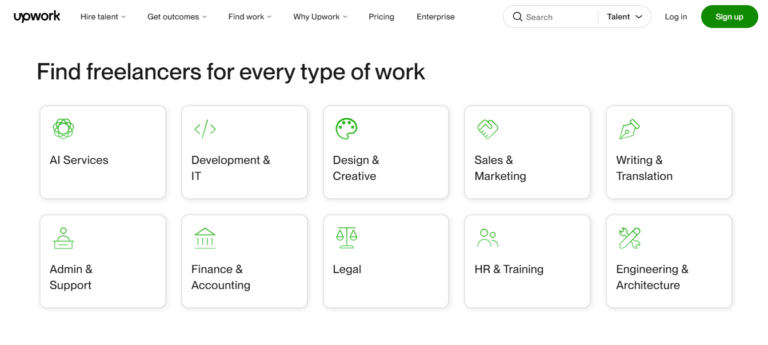
Freelancing is the most established route for Kenyans earning in foreign currency. You perform a service — writing, editing, graphic design, virtual assistance, bookkeeping, social media management, web development, translation — for a client abroad, and you’re paid per project or per hour.
Getting started: Create a profile on Upwork or Fiverr, build a small portfolio (even 2–3 sample pieces of unpaid practice work), and start applying to entry-level jobs or creating service listings (“gigs” on Fiverr). Expect the first few weeks to be slow — most successful Kenyan freelancers report it takes 20–50 applications before landing a first paying client.
Kenya-specific note: Upwork officially lists M-Pesa as a direct withdrawal option for Kenyan freelancers, alongside PayPal and Payoneer, according to Upwork’s own support documentation. Fiverr does not support direct M-Pesa withdrawal; Kenyan Fiverr sellers typically withdraw through Payoneer or Wise, then move funds to M-Pesa or their bank.
2. AI Data Work: Annotation, Transcription, and AI Training
Companies building AI models need humans to label images, transcribe audio, rate AI responses, and flag errors. Platforms like Remotasks (owned by Scale AI), Appen, and Outlier hire globally, including Kenya, for this kind of task-based work.
This is genuinely one of the more beginner-friendly categories because it requires no portfolio and often no prior experience — just an assessment or short certification before you can start taking tasks.
The honest picture: Multiple independent reviews describe these platforms as legitimate but inconsistent — pay is real, but task availability fluctuates, some weeks are dry, and basic tasks pay considerably less than advanced ones. Reported pay ranges for basic annotation work cluster around $3–$7 an hour, rising toward $10–$20 an hour for advanced or specialized tasks like LiDAR annotation, according to multiple platform reviews. Treat this as supplemental income you stack with other work, not a guaranteed full-time replacement for a job.
3. YouTube (Ad Revenue Actually Works in Kenya)
Kenya is one of a relatively small number of African countries where YouTube’s Partner Program (YPP) — the program that pays creators a share of ad revenue — is fully available. To qualify for ad revenue, a channel needs 1,000 subscribers and either 4,000 valid public watch hours in the past 12 months, or 10 million Shorts views in the past 90 days, along with a linked AdSense account and no active Community Guidelines strikes.
A lower “Tier 1” of monetization tools (channel memberships, Super Thanks, live-stream gifting) has become available to some creators at a lower threshold — around 500 subscribers and a smaller watch-hour requirement — before they reach full ad-revenue eligibility.
Because YouTube pays through AdSense, funds typically arrive via bank transfer once you cross a minimum payout threshold (usually $100), which then needs to be linked to a Kenyan bank account capable of receiving USD wire payments.
4. TikTok (Brand Deals Work; the Creator Fund Does Not — Yet)
This is a point many articles get wrong, so it’s worth being precise: TikTok’s Creator Rewards Program (the platform’s main pay-per-view monetization scheme) is not currently available to creators based in Kenya. It is limited to a small list of countries, mostly in North America, Western Europe, and a handful of others; no African country is currently included in the core program, based on multiple 2026 sources.
What does work for Kenyan TikTok creators:
- Live gifts: viewers send virtual gifts during livestreams, which convert to Diamonds and then to real money, though TikTok takes a substantial cut (commonly cited around 50%).
- Brand and affiliate partnerships: companies pay creators directly to promote products, often coordinated through influencer-marketing platforms serving the Kenyan market.
- Driving traffic elsewhere: many Kenyan creators use TikTok purely to build an audience, then monetize that audience on YouTube (which does pay ad revenue in Kenya) or through their own products and services.
5. Online Tutoring and Content Writing
If you have subject expertise — mathematics, English, a foreign language, university-level content in your field — tutoring platforms and content-writing sites (local and international) hire remotely. Writing pays per word or per article and varies enormously by platform and niche; technical, financial, and health writing generally pay more than general blog content because the required expertise is scarcer.
6. Selling Digital Products or Services to Local Clients
Not everything has to go through PayPal. Many Kenyans earn online by selling directly to other Kenyans — social media management for local businesses, graphic design for events, e-books or templates sold via WhatsApp or Instagram, or freelance services advertised on local Facebook groups. Payment is simple here: M-Pesa Till or Paybill.
Comparison at a Glance
| Method | Difficulty | Startup Cost | Payment Route | Best For |
|---|---|---|---|---|
| Freelancing (Upwork/Fiverr) | Medium–High | None (data bundle only) | M-Pesa (Upwork), Payoneer/Wise (Fiverr) | People with a marketable skill (writing, design, VA, coding) |
| AI data annotation (Remotasks/Appen) | Low | None | PayPal, Payoneer | Beginners wanting flexible, low-commitment work |
| YouTube ad revenue | High (slow to build) | Camera/editing tools | Bank wire via AdSense | Patient creators building a long-term channel |
| TikTok brand deals/gifts | Medium | Phone only | PayPal/M-Pesa (via brands) | Creators who already have an engaged audience |
| Online tutoring/content writing | Medium | None | M-Pesa, bank, PayPal | People with subject expertise or strong writing skills |
| Local digital services | Low–Medium | Minimal | M-Pesa Till/Paybill | People with an existing local network or niche skill |
How Much Can You Realistically Earn?
There is no single honest number here, and any article claiming otherwise is guessing. Realistic ranges vary by:
- Time invested — a few hours a week versus treating it as a full workday.
- Skill level and niche — specialized skills (technical writing, app development, financial analysis) command far more than generic tasks.
- Platform and task type — for AI annotation work specifically, reviewers report roughly $3–$7/hour for basic tasks and up to $10–$20/hour for advanced, specialized work.
- Client relationships — repeat clients who trust your work typically pay more than one-off gig-marketplace jobs.
A realistic expectation for a beginner freelancer in Kenya working part-time is a slow first month or two with little or no income while building a profile and portfolio, followed by gradually increasing and more consistent earnings as reviews and repeat clients accumulate. Treat any promise of a fixed weekly income as a red flag rather than a guarantee.
How You Get Paid: Payment Methods Compared
Getting international clients to pay you is only half the job — getting that money into a form you can actually spend in Kenya is the other half.
| Payment Method | Typical Fee to Withdraw to M-Pesa/Bank | Speed | Notes |
|---|---|---|---|
| PayPal → M-Pesa | A conversion fee of roughly 3% is commonly cited by fee-comparison sites (built into PayPal’s own exchange rate, not charged separately) | Minutes to a few business days | Use the official Safaricom–PayPal service in the M-Pesa app; verify the live rate before confirming, since fee estimates vary by source |
| Payoneer | Around $3 per withdrawal below $200; often free above that threshold | 1–2 business days | Kenya-registered; supports withdrawal to bank or, via partner services, M-Pesa; widely used for Upwork/Fiverr payouts |
| Wise | Roughly 0.5–1% plus a small FX margin | Often same-day to a few hours | Generally the cheapest option with the most transparent, close-to-market exchange rate |
| Upwork’s direct M-Pesa payout | Small fixed fee per transfer | 1–3 business days after funds clear | Available specifically to Kenyan Upwork freelancers per Upwork’s own support documentation |
| Bank wire transfer (SWIFT) | $15–30 per transfer | 3–5 business days | Cost-effective mainly for larger, infrequent withdrawals |
Practical tip: because most of these routes charge a fee per transaction rather than a percentage that scales with speed, withdrawing larger amounts less often is usually cheaper than withdrawing small amounts frequently.
Taxes: What KRA Expects From Online Income
This is the part most generic articles skip entirely, and it matters. Under Kenyan law, income earned by a Kenyan tax resident is taxable regardless of where the client or platform is based — this includes Upwork and Fiverr earnings, Remotasks or Appen payouts, YouTube AdSense revenue, and money received through PayPal, Wise, or M-Pesa.
- Get a KRA PIN if you don’t already have one — registration on the iTax portal (itax.kra.go.ke) is free and takes about 15–20 minutes.
- Turnover Tax (TOT) is a simplified regime for residents whose annual gross turnover falls between roughly KES 1 million and KES 25 million, charged as a flat percentage of gross income rather than profit. The exact rate has changed more than once in recent years (it moved between 1% and 3% under different Finance Acts), so confirm the current rate on the KRA website or with a tax professional before filing, rather than relying on any single blog post.
- Standard individual income tax (graduated bands from 10% up to 35%) applies if your online income doesn’t fit the turnover tax bracket, or if you choose to file that way to claim business expense deductions (internet, equipment, workspace).
- Annual returns are due by 30 June. Even in a year with little or no income, KRA generally still expects a return to be filed.
- KRA has been expanding its ability to cross-reference M-Pesa and bank statements against declared income. Keep basic records — invoices, platform statements, Payoneer/Wise transaction histories — so you can account for deposits if asked.
This isn’t intended as personalized tax advice, and Kenyan tax rules do change. If your online income becomes a meaningful part of your earnings, it’s worth a short consultation with a Kenyan tax professional or an accountant registered with the Institute of Certified Public Accountants of Kenya (ICPAK).
Advantages and Disadvantages
Advantages:
- Access to income in stronger foreign currencies (USD, GBP, EUR) that can outpace local wages once you’re established.
- Flexible hours — most of these methods can be done around a job, school, or family responsibilities.
- Low startup cost compared to most offline businesses.
- Transferable skills (writing, design, coding, customer service) that also help your local career prospects.
Disadvantages:
- Slow, sometimes discouraging ramp-up period before steady income appears.
- Currency conversion fees quietly eat into every payout.
- Task-based platforms (data annotation, surveys) can leave you with empty queues for days or weeks.
- Internet and power reliability directly affects your ability to meet deadlines.
- Client-side platforms can suspend or restrict accounts for reasons that feel arbitrary, with limited recourse.
Common Problems Kenyan Online Workers Face
- Payment platform restrictions. PayPal in Kenya, for instance, is largely limited to personal-use accounts with a one-way withdrawal path to M-Pesa or a linked bank account — it isn’t a full business payment rail the way it is in some other countries.
- Exchange rate opacity. Services rarely show the raw mid-market rate; always check the rate quoted at the moment of a transaction rather than assuming a flat percentage fee tells the whole story.
- Inconsistent task supply on annotation and micro-task platforms, which can make income unpredictable month to month.
- Client trust barriers. Some international clients are cautious about hiring from unfamiliar countries; a strong portfolio and clear communication offset this over time.
Is It Legit or a Scam? Red Flags to Know
Online work scams specifically targeting Kenyans are common, often circulated through WhatsApp groups, Telegram channels, and Facebook job ads. Kenyan fact-checking and consumer-safety sources consistently flag the same patterns:
- Any request for an upfront “registration,” “activation,” or “training” fee. Legitimate platforms — Upwork, Fiverr, Remotasks — are free to join. If you’re asked to pay before you can start earning, stop immediately.
- Guaranteed daily or weekly income claims (“Earn KSh 5,000 a day, no experience needed”). No legitimate task-based work pays that rate for unskilled clicking or liking.
- Unsolicited job offers via WhatsApp or SMS from recruiters you never applied to. Legitimate employers post on job boards and platforms, not cold messages.
- Requests to pay for “interview slots,” uniforms, or work permits before you’re hired — a pattern documented in real Kenyan job-scam cases involving fake overseas placements.
- Pressure and urgency (“offer expires in 2 hours”) designed to stop you from researching the company first.
- Payment demanded in gift cards or cryptocurrency for tasks that have no real reason to involve either.
- Fake screenshots of huge daily M-Pesa earnings, often recycled across multiple unrelated Telegram/WhatsApp groups as “proof.”
For anything involving investment or trading — forex signal groups, “AI trading bots,” or crypto schemes promising fixed daily returns — the Capital Markets Authority (CMA) and Central Bank of Kenya (CBK) have repeatedly warned Kenyans to verify a firm’s license on the CMA or CBK websites before sending any money, noting that unlicensed forex and investment platforms offer no legal protection if funds are lost.
A simple verification checklist before committing time or money to any “online job”:
- Search the company name plus “scam” or “review” — Trustpilot, Reddit, and Kenyan consumer forums usually surface problems quickly.
- Check whether the company has a verifiable, findable office or business registration — not just a WhatsApp number.
- Confirm they pay you before they ever ask you to pay them anything.
- For investment/trading platforms specifically, check the CMA’s public register (cma.or.ke) or CBK’s website before depositing funds.
Tips for Making More Money
- Specialize instead of generalizing. “Content writer” competes with thousands of profiles; “SEO content writer for SaaS companies” stands out and can charge more.
- Invest in your internet connection and, if possible, a basic laptop. Missed deadlines from connectivity issues cost you reviews and repeat clients.
- Track everything from day one — invoices, statements, and hours — both for client trust and for your own tax filing later.
- Diversify income sources. Relying on a single platform means a single suspension or dry spell can wipe out your income; combining freelancing with a task-based platform, for instance, smooths out income gaps.
- Withdraw in bulk where fees are flat per transaction, rather than making frequent small withdrawals.
- Build a portfolio even before you have paid clients — a few strong sample projects (even unpaid practice work) make the difference in early applications.
Alternatives Worth Considering
- Remote employment (not freelancing) — some international companies hire Kenya-based remote employees directly for customer support, sales, or operations roles, offering more stability than gig work, though usually with a formal application and interview process.
- Local digital agencies — Kenyan-run social media, design, or web agencies sometimes subcontract overflow work to freelancers, offering steadier work at more modest local rates than international clients.
- Skills-based online courses — platforms like Coursera or free resources (Google’s own digital skills training, YouTube tutorials) can help you build a marketable skill before committing serious time to freelancing.
Frequently Asked Questions
Do I need a laptop to start freelancing in Kenya? Not always. Writing, virtual assistance, transcription, and customer support can be done from a capable smartphone. Design, video editing, and software development are far more practical on a laptop.
Can I really withdraw PayPal earnings straight to M-Pesa? Yes, through the official Safaricom–PayPal service inside the M-Pesa app. A conversion fee (commonly cited around 3%, though exact figures vary by source and by PayPal’s daily rate) applies, and standard M-Pesa transaction limits govern how much you can move at once.
Is Remotasks or Appen a scam? No — both are described by independent reviewers as legitimate platforms with real, verifiable payouts. The realistic complaint is inconsistency (fluctuating task availability and modest pay for basic tasks), not non-payment.
Can I make money on TikTok in Kenya through the Creator Fund? Not currently. TikTok’s core Creator Rewards Program is not available to Kenya-based accounts as of 2026. Kenyan creators earn primarily through live gifts and brand/affiliate partnerships instead.
Do I have to pay tax on money I earn from Upwork or YouTube? Yes. Kenyan tax residents are required to declare and pay tax on income regardless of where it originates, including foreign-platform earnings. Register for a KRA PIN and confirm the applicable tax regime (turnover tax or standard income tax) for your situation.
How long does it typically take to get your first paying client on Upwork or Fiverr? There’s no fixed timeline, and it varies enormously by skill and effort. Many freelancers report it takes dozens of applications and several weeks before landing a first client — persistence and a strong, focused profile matter more than luck.
Is it safe to give my ID number to freelancing platforms? Reputable platforms like Upwork, Fiverr, Payoneer, and Wise require identity verification as a standard, legitimate anti-fraud measure. Be far more cautious about sharing ID numbers or documents with unverified “employers” contacting you directly via WhatsApp — that pattern is common in job scams.
Conclusion
Making money online in Kenya is genuinely possible, and thousands of Kenyans do it through freelancing, AI data work, content creation, and local digital services. It suits people willing to build a skill, tolerate a slow start, and treat platforms and payment fees with a clear-eyed, practical view rather than chasing guaranteed-income promises.
It is not suited to anyone looking for guaranteed daily payouts with no skill or effort involved — that expectation is exactly what scammers exploit. If you’re starting out, pick one method that matches a skill you already have or are willing to learn, set up a legitimate payment route (M-Pesa via Upwork, or Payoneer/Wise for other platforms), register for a KRA PIN early, and give it a realistic few months before judging whether it’s working for you.





5 Comments